 Reviews
Back to Home
Reviews 13 min read time 1 viewsAug 05, 2026(Updated on Aug 07, 2026)
Yadea GS70: Is the Future of Work Electric?
The Yadea GS70 Pro arrives at the Interlagos Festival. See if the electric motorcycle is worth it for deliveries and check out a cost comparison.
Yadea GS70 and the Silent Threat on the Streets
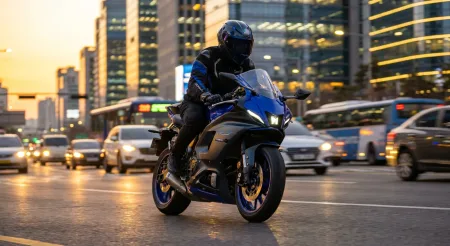
Straight talk, rider: will your next work bike be electric? It might seem like a distant question, but the truth is that a silent revolution is gaining momentum in lane-splitting corridors and avenues. While the roar of combustion engines still dominates the delivery soundscape, a growing fleet of electric scooters and motorcycles is starting to infiltrate, promising to change the rules of the game. And the epicenter of this earthquake has a set date and location: the Suhai Interlagos Festival 2026, taking place between August 13 and 16 at the legendary São Paulo racetrack. This isn't just another event; it's the stage chosen by Chinese giant Yadea, a global leader in two-wheeled electric vehicles, to make an announcement that could directly impact your wallet.
The star of the show will be the Yadea GS70 Pro, a model arriving with its sights set firmly on app workers and motorcycle couriers. Forget the image of electric scooters being just for leisure; we're talking about a work tool designed for the daily grind. Yadea's decision to use Latin America's largest motorcycle event as a launch platform is no coincidence. It is a statement of intent, a clear sign that competition is heating up. While many of us are still doing the math, calculating the maintenance cost of a 160cc, the electric market is gearing up to present an alternative focused on the most sensitive point for professionals: operating costs. The festival will therefore be a turning point, the moment when the viability of electric motorcycles for deliveries will be put to the test before the most demanding audience there is: you, the rider who lives on two wheels.
Technical X-Ray of the Yadea GS70: What to Expect
In practice, what does the Yadea GS70 Pro promise to deliver? Although the Chinese brand is keeping fine details under wraps regarding the "Pro" version to be homologated for Brazil, we can get a great baseline by looking at the global GS70 spec sheet. And the numbers are focused on urban reality. The motorcycle is equipped with a hub-type electric motor, which eliminates the need for belts or chains, simplifying maintenance. It delivers a nominal power of 1,500W (around 2 hp) and reaches peaks of 2,800W (nearly 4 hp). The highlight, however, is the torque: 105 Nm available instantly. For daily deliveries, this translates into agile pull-offs at traffic lights and power to tackle steep hills effortlessly, even with a delivery bag on your back.
Power is supplied by a 72V 30Ah Lithium Iron Phosphate (LFP) battery. The choice of LFP is strategic, as this type of battery is known for greater safety and a longer lifespan compared to other lithium chemistries. The estimated range is approximately 81 km on a full charge, and the top speed is limited to 55 km/h, suitable for heavy traffic in major cities. The big question to be answered at the Interlagos Festival is: will the GS70 Pro version feature higher-capacity batteries, a more powerful motor, or perhaps the option of removable batteries for quick swapping? That is the lingering expectation that could define the model's success in Brazil's competitive gig economy.
Technical Specs – Yadea GS70 (Global Version)
- Motor: Rear hub electric motor
- Nominal/Peak Power: 1,500 W (2 hp) / 2,800 W (4 hp)
- Maximum Torque: 105 Nm
- Battery: Lithium Iron Phosphate (LFP) 72V 30Ah
- Estimated Range: 81 km
- Top Speed: 55 km/h
Gas Station Bill vs. Electricity Bill
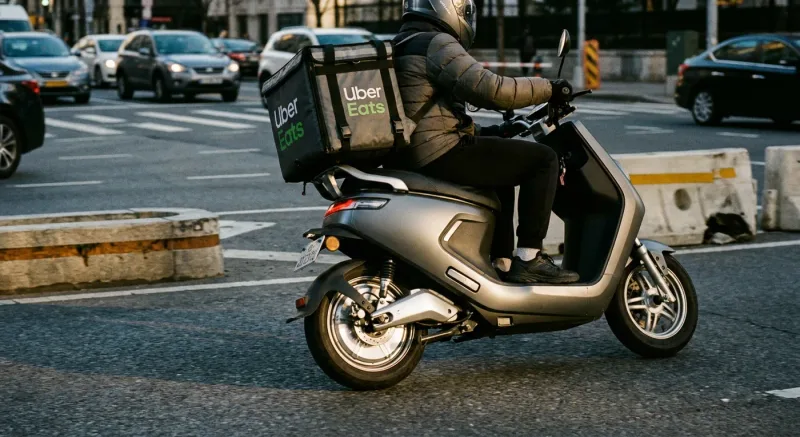
Let's get straight to the point that matters most to those who ride all day: money. The main promise of transitioning to a work electric motorcycle is the massive savings in running costs. The numbers don't lie, and the difference is striking. Refueling a popular 160cc motorcycle, considering gas at R$ 5.50 per liter and an optimistic fuel consumption of 30 km/l, results in a cost of approximately R$ 0.183 per kilometer driven. On the other side of the scale, the cost to charge the Yadea GS70 battery, with an average electricity rate of R$ 0.80 per kWh, comes to around R$ 0.032 per kilometer. In other words, riding on electricity is almost six times cheaper.
To put this into perspective, let me do the math for the month. A motorcycle courier who rides an average of 3,000 km monthly would spend around R$ 549.00 just on gas. With the electric bike, that same cost drops to just R$ 96.00. The difference is R$ 453.00 left in your pocket every single month. In one year, those savings exceed R$ 5,400.00 — an amount that can pay for motorcycle insurance, tire replacements, or even a down payment on a new vehicle. And if this calculation is already striking compared to a low-displacement bike, the gap widens even further when compared with larger models, as seen in the cost per km of the MT-03, for example. Financial advantage is the most powerful argument the Yadea GS70 brings to the table.
Monthly savings of over R$ 450 aren't a promise, it's math. It's money that stops going to the gas station and stays in your pocket to pay other bills or invest in your own work tool.
Total Cost of Ownership: Electric vs CG 160
The savings of an electric motorcycle go far beyond the electricity bill. To understand the real impact on your budget, you need to analyze the
👍 Pros / Strengths
- Purchase price: Initial cost generally higher than a popular combustion bike.
- Range and charging: Limited range requires planning, and charging time (4 to 8 hours) can immobilize the motorcycle.
- Resale value: Uncertainty regarding depreciation and long-term used market value.
- Battery cost: Battery replacement after its lifespan is a significant future cost to consider.
👎 Cons / Weaknesses
- Of course, to be fair: the Honda CG 160, absolute market leader, counts ease and low maintenance costs among its greatest assets. Any neighborhood mechanic knows how to work on a CG, and its parts can be found on every corner, original or aftermarket, at affordable prices. This availability and simplicity act as a safety net for professionals who cannot afford downtime. Transitioning to electric therefore involves a trade-off: trading mechanical complexity for electrical simplicity, which, however, may require specialized labor in case of issues with the battery system or controller. Evaluating this shift is critical before making a decision.
The Real Obstacles for Electric Couriers
The promise of up to 70% operational savings is undoubtedly the biggest draw of an electric motorcycle like the Yadea GS70 Pro for those who ride for a living. However, road reality presents challenges that spreadsheets don't show. The main obstacle is time. For a courier who needs to maximize working hours, a 4-to-8-hour recharge time using a standard outlet is poison for productivity. While a gas tank is filled in less than five minutes, a full recharge practically means the end of a work shift. This long wait turns fuel savings into potential lost revenue, especially on high-demand days.
The lack of a rapid battery swapping infrastructure in Brazil aggravates this scenario. In countries where this technology is widespread, riders simply stop at a station, swap their depleted battery for a fully charged one in minutes, and get back on the road. Without this solution, Brazilian delivery riders remain hostage to the GS70's declared 81 km range. For those riding extensively in large urban hubs like São Paulo or Rio de Janeiro, this distance may be insufficient for a full workday, forcing long, unplanned stops. Furthermore, battery degradation looms over the investment. Like a smartphone, lithium batteries have a finite number of charge and discharge cycles. Over time, their energy capacity declines, reducing overall range. The cost of replacing a battery pack can wipe out years of fuel savings, representing a significant financial risk for independent workers.
👎 Cons / Weaknesses
- Charging Cost: Charging the bike at home overnight costs a fraction compared to gas.
- Fewer Gas Station Visits: The convenience of "refueling" in your own garage eliminates gas station stops.
- High Recharge Time: 4 to 8 hours for a full charge, making mid-shift recharges impractical.
- Non-existent Swapping Infrastructure: Lack of battery swapping stations prevents work continuity once range is depleted.
- Scarcity of Public Charging Points: Finding a compatible public charger for motorcycles is still rare in Brazilian cities.
- Degradation Risk: Battery lifespan is limited, and replacement represents a very high future cost, affecting resale value.
Challenger Brands: Bajaj, Shineray, and Dafra/SYM
While the electric transition matures, delivery professionals seeking alternatives to the established Honda-Yamaha duopoly find an interesting battlefield among challenger combustion brands. Indian brand Bajaj, for instance, entered Brazil with an aggressive pitch: a 3-year unlimited mileage warranty and fixed-price servicing. That is a strong promise for those who ride thousands of kilometers a month. However, the brand's Achilles' heel appears to be after-sales support. An analysis on consumer review portal Reclame Aqui reveals recurring complaints about delayed parts delivery, with reports of up to 90-day waits for basic components. For a courier, three months of downtime is a financially catastrophic loss, making the long warranty questionable in practice.
At the other end of the spectrum is Shineray, which relies on very low acquisition prices and widespread dealer availability. The problem is that cheap can end up expensive. A warranty of just 3 months for most of its utility models is a red flag. On top of that, the brand suffers from sharp depreciation in the used market, where models lose 35% to 50% of their value in the first year. This means the worker's invested capital evaporates quickly. In a more balanced scenario comes Dafra/SYM. With a consolidated manufacturing operation in Manaus, the brand offers long warranties (from 3 to 5 years) and, crucially, an after-sales service that works. With up to 98% parts availability across its network and a solid reputation on review sites, Dafra positions itself as the safest and most rational choice among challengers, directly impacting the feasibility of financing a motorcycle to work with delivery apps, as mechanical reliability and predictable costs are essential.
Mechanic's Highlight: For riders who depend on their bike, parts availability time is more important than the cost of routine service. Before getting enchanted by factory warranties, thoroughly investigate after-sales reality. Ask repair shops and owner groups about common wear items like sprockets, chains, brake pads, and cables. A bike with easily accessible parts—whether original or quality aftermarket—is the one that keeps you on the street earning.
How to Test Ride and Purchase Post-Interlagos Festival
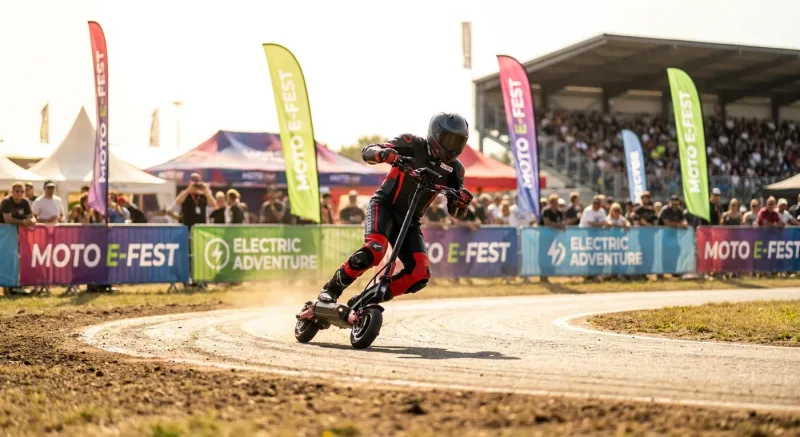
The Interlagos Festival is a spectacular showcase, but understanding how it works is key to avoiding false expectations. You won't drive away from the racetrack with a brand-new bike right then and there. The event is an experiential platform and lead generator. For the most anticipated moment—the test ride—planning is required. The first step is purchasing a specific ticket that includes riding privileges, such as the Ride Pass or Sport Pass. Purchases are made in advance via the official event website or Ticketmaster Brazil. Buying a standard ticket (Street Pass) and expecting to ride bikes on the main track won't work.
With the riding pass in hand, visitors can schedule tests for the models they are interested in, subject to slot availability. Remembering the requirements is crucial: presenting a valid Class A motorcycle driver's license (CNH) is mandatory, along with full protective gear (helmet, jacket, long pants, and closed-toe footwear). The festival's main highlight is allowing you to test bikes in distinct environments: high-performance models on Interlagos' main layout, trail bikes on a dedicated off-road track, and scooters like the Yadea GS70 on urban mobility circuits. After falling in love with a launch at the festival, the buying journey truly begins. During the event, manufacturers collect contact details. Once the festival ends, these leads are distributed to the authorized dealership network. The deal is closed at the dealership, where you can discuss financing, consortiums, insurance, and delivery timelines. For highly anticipated models, brands often open pre-order lists, ensuring early buyers receive their bikes as soon as the first shipment arrives in the country.
Verdict: Time to Switch or Hold Back?
The decision to change bikes, especially when considering a new technology like electric, must be cold, calculated, and fully aligned with your financial and professional reality. There is no single answer, but rather two distinct paths. The first is for riders who can wait: if you already have a bike running well, have no urgent debts, and are in a planning phase, then yes, it is worth waiting for the Interlagos Festival. The event will be your best opportunity to research, compare competitors side-by-side, take valuable test rides, and perhaps take advantage of special launch conditions on the Yadea GS70 Pro or another release. For this profile, patience is a strategic virtue that can lead to a smarter, more cost-effective purchase in the long run.
The second path is for riders who need an immediate solution. If your bike broke down, if you are just starting out in deliveries, or if your current work tool spends more time in the repair shop than on the road, don't wait for the festival. Every day without riding is a day without earning. In this scenario, the most sensible decision is to immediately look for a reliable pre-owned or used bike on the market. Models like the Honda CG, Yamaha Fazer, or even a well-maintained Dafra/SYM offer liquidity, abundant parts, and a lower purchase cost, protecting your daily livelihood. For this path, one rule is non-negotiable: demand a full vehicle inspection report (laudo cautelar). This document is your only guarantee that you aren't buying trouble disguised as an opportunity. Ultimately, the best bike for work isn't the most modern or cheapest one, but the one that fits your budget and keeps you productive with minimal risk. Plan, research, and be brutally honest about your financial situation before taking the next step.
Tags:ReviewsYadea GS70delivery electric motorcycleInterlagos Festival 2026cost per km electric motorcycleYadea GS70 Pro
Recommended Posts
Comentários (0)
Participe da discussão
Faça login ou cadastre-se rapidamente para enviar seu comentário. É simples e leva menos de 1 minuto!
Nenhum comentário por enquanto. Seja o primeiro a opinar!