 Reviews
Back to Home
Reviews 10 min read time 0 viewsAug 07, 2026(Updated on Aug 10, 2026)
Yamaha R15 2026: Is It Worth Riding Every Day in the City?
The clutch detail that every lane-filtering rider discovers the hard way on the 2026 Yamaha R15. See costs, fuel consumption, and the reality of urban traffic.
Listen to Article Narration
00:0000:00
The Secret of the Slipper Clutch in Urban Traffic
Many motorcyclists looking at the 2026 Yamaha R15 for its stunning racetrack-inspired looks end up ignoring a vital component: the assist and slipper clutch. In the frantic stop-and-go of major cities, where lane filtering becomes the natural habitat, most riders discover the expensive way — through excessive fatigue or premature clutch plate wear — that constant manual operation is a test of endurance. The new R15, including its iconic MotoGP edition, arrives to change that narrative.
Slipper technology isn't just an ornament for those who want to aggressively upshift. In urban practice, it drastically reduces the lever effort required, allowing lighter shifts and preventing rear wheel lockup during sudden downshifts, common when a vehicle unexpectedly cuts you off. Understanding how to operate this clutch is the difference between having a sportbike that tires you out in ten minutes or a precise ally in daily mobility. To learn more about preventive maintenance for this essential component, we recommend reading our complete preventive maintenance guide.
Unlike purely utilitarian models, the 2026 R15 requires riding adaptation. If you ignore the assistance provided by the clutch system, you end up overloading not just the cable, but the entire drivetrain assembly. The rider who masters the R15 understands that the motorcycle was designed to be agile, but demands refined riding, taking advantage of every technological innovation Yamaha built in to transform urban chaos into an experience of absolute control and ergonomic comfort.
Technical Specs and Technology: Why Does the 155cc Perform So Well?
The heart of the 2026 Yamaha R15 is a 155cc engine that defies small-displacement logic. The competitive edge here lies in the VVA (Variable Valve Actuation) system, a technology that alters valve timing depending on engine RPM. This guarantees satisfying low-end torque — ideal for launching from traffic lights — and surprising power delivery at high revs, allowing the bike to maintain cruising speeds without showing signs of excessive strain.
- Engine: Single-cylinder, 4-stroke, liquid-cooled, 155cc, VVA.
- Maximum Power: Approximately 18.4 hp at 10,000 rpm.
- Maximum Torque: 1.4 kgfm at 7,500 rpm.
- Chassis: Deltabox, known for rigidity and cornering stability.
- Front Suspension: Upside-down (USD) telescopic fork for greater precision.
- Transmission: 6 speeds with assist and slipper clutch.
In practice, the Deltabox chassis provides a level of structural rigidity rarely seen in this category. It competently absorbs urban road imperfections and gives the bike leaning stability that imparts immediate confidence to the rider. The upside-down front suspension setup completes the package, absorbing impacts from dips and uneven asphalt with terrain reading far superior to conventional models. The engine, aided by VVA, ensures the R15 doesn't need to be revved out to keep up with fast traffic, maintaining commendable progressiveness that separates recreational bikes from true precision engineering machines.
Real Fuel Consumption and Performance on the Asphalt
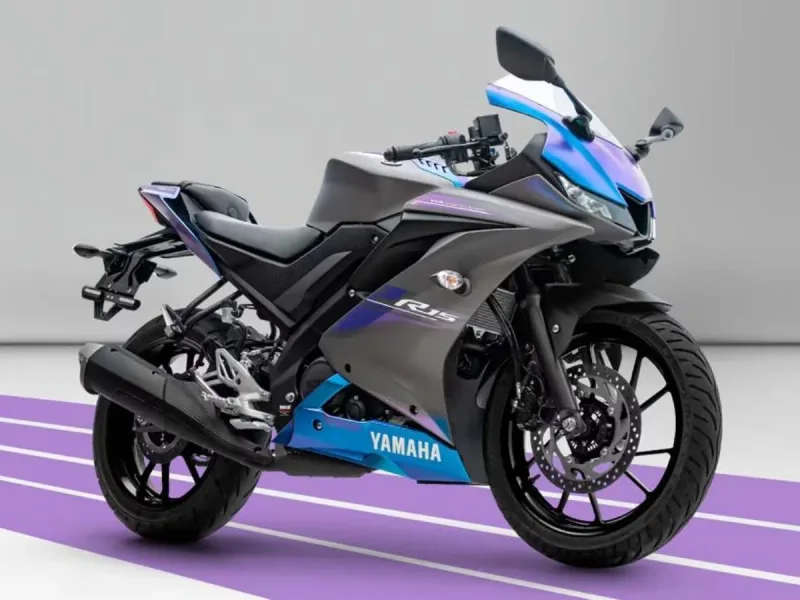
When talking about a sportbike, the first question from everyday commuters is: is fuel consumption punishing? The answer is surprising. Thanks to precise electronic management and the VVA system, the 2026 R15 delivers averages ranging between 40 km/l and 45 km/l in moderate urban use. This efficiency allows the rider to enjoy high-compression engine performance without visiting the gas station daily—the ultimate nightmare for many entry-level bike owners.
On highways, the R15's behavior remains stable. Even on mountain passes or open roads, cruising speed stays around 100-110 km/h without excessive vibration, a signature characteristic of its balancing. Speed acceleration, a crucial element for performance in city traffic, is agile enough to allow quick and safe passing. Unlike other small-displacement bikes that 'die' when encountering a hill or a gust of wind, Yamaha's 155cc engine maintains the necessary vigor. It is worth noting that fuel economy can vary drastically depending on rider weight and aggressiveness of gear shifts, but overall, the R15 establishes itself as one of the most balanced options between fuel consumption and power delivery in today's market.
Yamaha R15 vs Direct Competitors in the Entry-Level Segment
In the fierce entry-level motorcycle market, the 2026 R15 positions itself uniquely. While many competitors focus exclusively on mechanical robustness and low cost, Yamaha's approach is to raise the segment's technological standard. Compared to naked models in the same price range, the R15 offers an aerodynamic fairing package, superior suspension components, and a full digital instrument panel that together justify the slightly higher initial investment.
The key question for the buyer is: are you paying for looks or for engineering? The reality is that the R15 offers both. Many competitors, despite being great for daily commutes, lack brakes with stronger bite or a high-performance clutch. For those who want a detailed analysis comparing the R15 with other sport options, we created a definitive market comparison to assist in your decision. When evaluating cost-benefit, it is essential to consider that the R15's depreciation tends to be lower precisely due to the visual appeal carried by the MotoGP line, alongside the reliability of the Japanese brand which doesn't compromise on material quality even in small-displacement bikes.
Beginner Rider: Is It Worth Starting Your Sport Journey with It?
For motorcyclists taking their first steps, the 2026 R15 is a tempting invitation to the world of sportbikes, but it demands responsibility. Its aggressive geometry, with rearset footpegs and low handlebars, forces a riding posture that can be exhausting on long trips if the beginner isn't physically conditioned. However, its docility at low revs makes it extremely friendly for anyone stepping up from a scooter or a conventional 125cc bike. The chassis lightness facilitates low-speed maneuvering, and the braking system is predictable and safe.
Ultimately, the R15 is not just a 'beginner bike'; it is a learning platform. It teaches the rider how to use the gearbox, work the engine within the correct torque curve, and understand high-performance motorcycle handling at a smaller scale. Still, not everything is smooth sailing financially. Although fuel-efficient, maintaining a motorcycle with high-end onboard technology brings a few financial surprises every owner needs to know. Stay tuned for the next part of our analysis, where we reveal the hidden costs of parts and service revisions that could change your perspective on this small sportbike's economy.
Riding Posture and Wrist Fatigue in Lane Filtering
When talking about the 2026 Yamaha R15, it's impossible to ignore the elephant in the room: ergonomics. Designed with racetrack DNA, the bike imposes an aggressive riding stance that, while a delight on twisty roads, becomes a physical challenge in heavy metropolis traffic. The clip-on handlebars place a significant weight load onto the rider's wrists and shoulders, a characteristic that exacts its toll after about 30 to 40 minutes of low-speed riding between cars.
Many owners report that, unlike conventional street bikes, the R15 demands core abdominal effort to relieve strain on upper limbs. If you're not used to this geometry, muscle fatigue will become your constant companion in the initial weeks. It's important to note that this characteristic is not a defect, but a design choice focused on aerodynamics and sporting agility.
Workshop Alert: Do not attempt to raise the handlebars using generic adapters of dubious origin. This alters the triple-tree geometry and can compromise steering response during emergency braking, in addition to voiding the factory warranty on the steering assembly.
If your daily route involves hours of gridlock, adaptation is necessary, but the physical wear is real and must be counted as a non-monetary cost in your purchase decision.
Engine Heat and Silent Tire Wear in the City
An aspect that goes unnoticed in the showroom but becomes evident during the first days of intense urban use is the heat dissipation from the 155cc engine equipped with Variable Valve Actuation (VVA). On hot days, sitting stalled in traffic, the radiator fan will run constantly, blowing heat directly onto the rider's legs. This is a discomfort factor that, combined with the aggressive posture, can make commuting to work an exhausting task during the summer.
Beyond the heat, there is the issue of stock tire wear. The R15 encourages more dynamic riding, prompting the rider to take advantage of its superior chassis dynamics to make quick lane changes and precise stops. However, urban pavement—often uneven and littered with debris—punishes these sport tire compounds far more than a smooth track surface. It is essential to keep your tire pressure strictly up to date according to the manual recommendations, as any pressure variation can drastically accelerate rubber degradation and reduce safety on wet roads or gravel surfaces.
Invisible Maintenance Costs and Replacement Parts
The 2026 Yamaha R15 delivers remarkable performance for its engine size, but you must be clear about what that means financially. Maintaining a bike with cutting-edge tech, such as the VVA system and a high-precision slipper clutch, requires consistent care. Oil changes, for example, must strictly follow the mileage schedule and oil specifications designated by the manufacturer to prevent premature wear on the valve train system.
Besides preventive servicing, the owner should be prepared for replacement costs. Components like the high-performance drive chain kit and specific brake pads carry a higher market value than parts for standard 150cc or 160cc commuter bikes. A critical point of attention for daily use is fairing replacement costs. In the event of minor parking tip-overs or side impacts during lane filtering, replacing genuine plastic fairings can strain your budget. The sophisticated design with aerodynamic lines relies on structural bodywork that, once damaged, loses its perfect factory fitment.
👍 Pros / Strengths
- Impressive fuel economy at steady speeds; top-tier chassis dynamics providing cornering confidence; VVA technology delivering power across varied rev ranges; slipper clutch preventing rear wheel hop during aggressive downshifts.
👎 Cons / Weaknesses
- Tiring ergonomics for prolonged traffic riding; engine generates noticeable heat on hot days; maintenance and spare parts costs above the entry-segment average; reduced passenger comfort compared to standard street models.
Straight Talk Verdict: Is the R15 for Your Wallet or Just Style?
Coming to the verdict, the 2026 Yamaha R15 is undeniably an engineering milestone in the small-displacement segment. It delivers far more than a attractive fairing or a MotoGP-inspired design; it provides a real sport riding experience. However, owning this experience requires physical and financial commitment. It is not a 'budget' bike in terms of cheap maintenance, and it definitely isn't built for those seeking maximum comfort in urban traffic jams.
If you fit the profile of a rider who values handling dynamics, technical learning, and standout styling, the R15 is one of the finest choices money can buy right now. It pays for itself through the satisfaction of operating a technically superior machine. If, on the other hand, you need a purely utilitarian vehicle with low upkeep costs and a relaxed riding position, it might be worth exploring other models from the brand. What about you? What has been your experience with small-displacement sportbikes in city traffic? Share your thoughts in the comments below and help other riders make their next choice!
Recommended Posts
Comentários (0)
Participe da discussão
Faça login ou cadastre-se rapidamente para enviar seu comentário. É simples e leva menos de 1 minuto!
Nenhum comentário por enquanto. Seja o primeiro a opinar!