 Reviews
Back to Home
Reviews 9 min read time 1 viewsJul 30, 2026(Updated on Aug 07, 2026)
Move Brasil: The Motorcycle Financing Trap
The easy credit promised for delivery drivers hides a heavy debt on the asphalt. See the risks of Move Brasil before signing.
Listen to Article Narration
00:0000:00
The Miracle of Easy Credit at the Repair Shop Counter
Easy credit for delivery drivers hides a perfect trap of eternal debt. Every day, a fellow driver arrives at the shop counter smiling because they got a brand-new motorcycle through the government program, but within three months, the smile disappears amidst the bills.
They sold the idea that the Move Brasil program was a lifesaver for those working in app delivery or motorcycle courier services. They said the government opened doors and that the bank finally looked at two-wheeled workers with care.
However, when you take the contract to read carefully during a break from the grease, you realize nobody gave you any gift. You didn't buy a work tool to achieve your independence; you signed a promissory note for installment slavery.
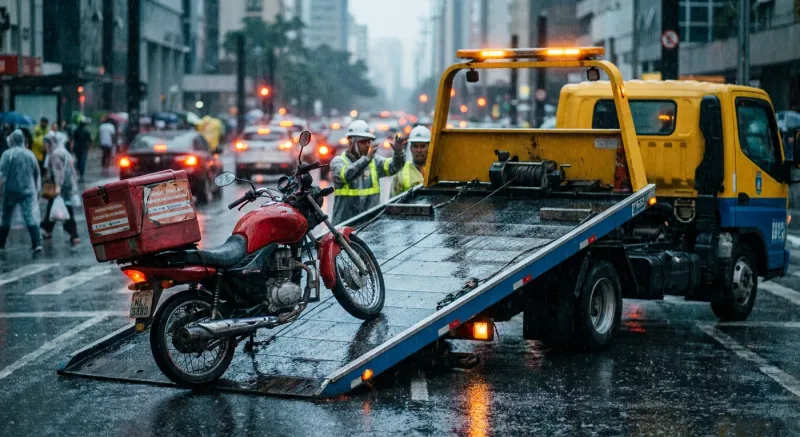
The plain truth is that this incentive turns market risk into a monthly payment booklet in your name. If the app platform cuts your rides tomorrow, the bank doesn't care: the bike gets towed to the impound lot, and your credit name goes down the drain.
How the Move Brasil Line Works in Practice
Move Brasil is a program managed by BNDES and MDIC that pushes major banks—such as Caixa, Banco do Brasil, Bradesco, Itaú, and Santander—to lend money to gig workers on the hustle.
The promise is nice: renew the fleet, put less polluting motorcycles on the street, and grant access to credit for those registered on apps or formally employed. But to join this deal, the bar of bureaucracy is high.
For those driving on apps like iFood or Uber, the bank requires at least 6 months of active registration and at least 100 completed deliveries or rides. If you're formally employed (CLT), you need to have been steadily at the same company for 6 months.
Furthermore, forget about trying to resolve everything right at the dealership counter without going through government scrutiny. You need a Gov.br account at the Silver or Gold level to release your data and see if the system approves you.
Allowed Motorcycles: What's In and What's Out
Don't even think about dreaming too high, expecting to get a high-end machine to deliver in comfort. The program capped the engine size at low displacement and limited it to specific urban models manufactured in the country.
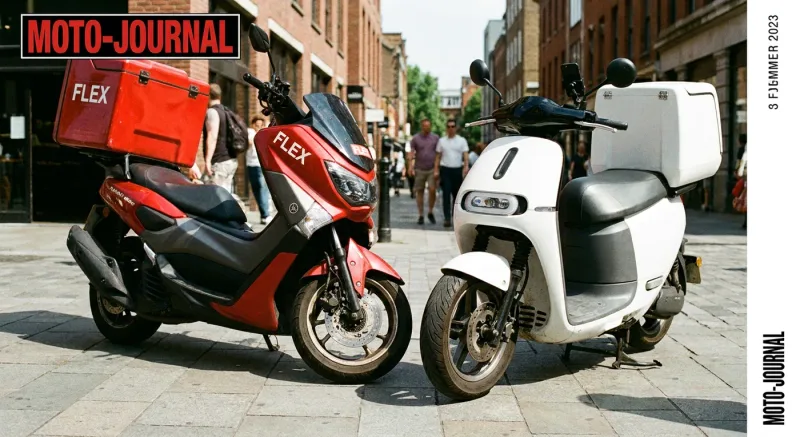
The list includes flex-fuel combustion motorcycles up to 165 cc, as well as electric models up to 7,500 watts and electric bikes up to 1,000 watts. In other words: the basic bread and butter of daily work.
APPROVED MODEL ANALYSIS
Motorcycles of the Move Brasil Program
Flex Up to 165cc
- Honda ModelsCG 160 (Cargo/Fan/Titan) and Bros 160Asphalt Translation: The bread and butter of deliveries. Cheap parts, but targeted heavily for theft.
- Yamaha ModelsFactor 150, Fazer FZ15, and Crosser 150Asphalt Translation: Comfortable for riding 12 hours, but official dealer network maintenance is pricier.
Approved Electric Models
- Electric MotorcyclesShineray SE1/SE2, Watts W125, and Yamaha NeosAsphalt Translation: Save on gas, but require a charging location and lose power on steep uphill climbs.
And if you heard hallway gossip about getting bigger bikes, get real. A Dafra SYM ADXTG 300 costs R$ 32,990 and is far beyond the program's displacement limit. Same thing with the Haojue NK160, which isn't even on the official approved list.
The Financing Calculation: Interest Rates, Terms, and Real Cost
Move Brasil advertising proudly claims that interest rates are super friendly: between 11.25% and 11.5% per year for women, and 12.25% to 12.5% per year for men. That equals around 0.90% to 0.99% per month.
It sounds like a steal compared to traditional consumer direct credit (CDC) that charges up to 3% per month, but the devil lies in the details that the bank manager doesn't explain when you sign.
They sell the possibility of financing 100% of the motorcycle in up to 48 installments with a 2-month grace period. However, financing with no down payment means pushing the full amount into compound interest rates for four full years.
| Credit Type | Average Rate / Cost | Typical Term | Total Bike Cost (R$ 25k) |
|---|---|---|---|
| Move Brasil (BNDES) | 11.5% to 12.5% per year | 48 months | Approx. R$ 32,000 to R$ 35,000 |
| Conventional CDC | 30% to 45% per year | 48 months | Can exceed R$ 42,000 |
| Motorcycle Consortium | Admin fee (10% to 25% total) | 60 months | Approx. R$ 28,000 to R$ 30,000 |
In the end, a R$ 21,000 motorcycle costs over R$ 32,000. You work an entire year just to pay the financial institution's profit margin.
The Hidden Clauses That Will Catch You Off Guard
Before putting your signature on the dotted line, you need to check our complete analysis of Move Brasil to understand the claws of fiduciary alienation.
Fiduciary alienation means the motorcycle isn't yours until you pay the very last installment. It stays in the bank's name. If you miss three payments because you caught a bad flu and couldn't ride, search and seizure repossession knocks on your door.
To make matters worse, the contract forces you to get credit protection insurance and vehicle insurance. If you delay the monthly payment, you get slapped with a 10% penalty fee in the first six months, on top of astronomical default interest rates after that.
The bank protects itself from every angle against default, while you take on the risk of riding on wet asphalt, getting cut off by cars, and ending up with zero income to pay the following month's installment.
City Halls and Municipal Laws: The Net is Closing In
Thought paying the bank payment booklet was the only problem? Enforcement in major cities has turned a delivery driver's life into an obstacle course full of fines.
In São Paulo, for example, Law 18,349 arrived to grind down professionals. It demands commercial red license plates, a motorcycle engine between 150cc and 400cc, a maximum manufacturing age of 8 years, and city hall approval through a registration process that takes up to 60 days.
Shop Warning: If you are caught riding in bus lanes, on Marginais Tietê and Pinheiros, or on Av. 23 de Maio with an app delivery motorcycle in SP, the fine can reach R$ 700 for the rider and the bike goes straight to the impound lot.
Furthermore, the law prohibits working on days with heavy rain or storms. In other words: on the exact day when app dynamic surge pricing increases and you could make extra cash to pay the installment, the city hall forbids you from riding.
The Bureaucratic Step-by-Step on Gov.br and Banks
If even knowing the risks you still want to face financing, pour yourself a strong coffee because the digital pilgrimage is long and frustrating.
First, you download the Gov.br app on your phone and complete facial validation until reaching Silver or Gold level. Then you log into the Move Brasil portal and authorize the government to access your data.
The system takes up to 5 business days to tell if you are eligible. With proof in hand, you go to the Banco do Brasil, Caixa, or Bradesco app to attempt a credit simulation.
At this stage, if you have a bad credit record or a low Serasa score, the door slams in your face. And if you think the market only offers low displacement, you can look at the details of the Yamaha MT-03 to see how the cost of riding larger bikes is completely unrealistic for delivery work.
Pros and Cons of the Move Brasil Program
Weighing everything from the perspective of someone living behind the handlebars, the program has clear advantages on paper, but charges a heavy price in daily road reality.
✅ Pros
- Interest rates below traditional market CDC.
- Possibility of financing 100% with no down payment.
- Long 48-month term to dilute installment costs.
- Guarantee of getting a brand-new motorcycle.
❌ Cons
- Long-term debt that ties up income for 4 years.
- Mandatory insurance that increases the final price.
- Immediate risk of losing the bike in case of illness or a fall.
- Lack of flexibility if app delivery pay rates drop.
If you're looking for something outside of professional use to enjoy weekends and want to compare sporty options, it's worth reading our naked motorcycles guide to understand where it's worth spending your money.
The Hidden Costs That Nobody Puts in the Payment Booklet
Anyone buying a brand-new bike thinks they'll spend two years without spending a dime at the shop. Pure illusion from anyone who has never ridden 150 kilometers a day delivering food orders.
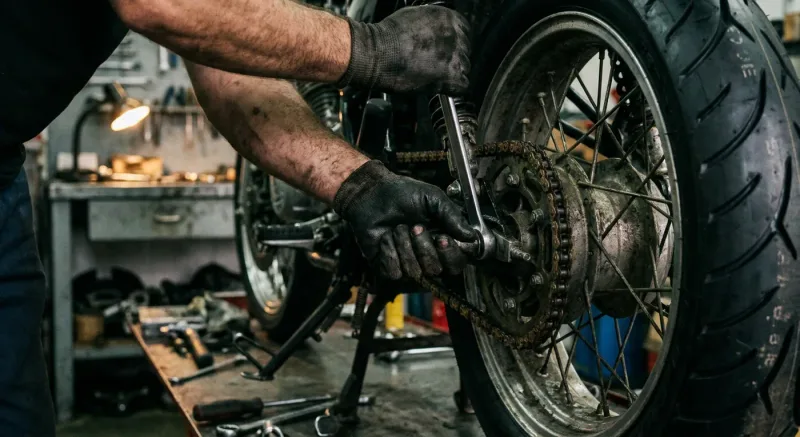
A delivery motorcycle wears out a rear tire every 8,000 km, requires an oil change every 1,500 km, and rapidly wears down the drive chain kit due to stop-and-go urban traffic.
Calculate carefully the mandatory dealer maintenance checks required to keep the factory warranty. If you miss one service, you lose the warranty, but the financing installment keeps arriving in your mailbox strictly every single month.
If you add up the financing payment, daily gas, bank insurance, mobile plan, and preventive maintenance, you realize you need to ride 8 hours a day just to pay the bike's fixed costs before putting a single cent of profit in your pocket.
Shop Verdict: Is It Worth Signing the Contract?
Here at the shop counter, we speak the truth straight: Move Brasil is only worth it if your financial life is organized, with no other debts in your name, and an emergency savings reserve.
If you enter financing completely broke, expecting the bike to pay for itself from day one without a penny saved for potential days off work, back out because it's a guaranteed trap.
A silly fall that leaves you bedridden for two weeks unable to ride is enough to spark a snowball of overdue payments, late fees, and vehicle repossession.
Think twice, do the math carefully, and don't be fooled by nice talk about financial aid. On the road, you are the only one who feels the pain of the monthly payment and the weight of maintenance.
Tags:Reviewsmove brasildelivery motorcycle financingapp motorcyclemotorcycle debtbndes motorcycle financingfinanced cg 160
Recommended Posts
Comentários (0)
Participe da discussão
Faça login ou cadastre-se rapidamente para enviar seu comentário. É simples e leva menos de 1 minuto!
Nenhum comentário por enquanto. Seja o primeiro a opinar!