 MotoGP
Back to Home
MotoGP 5 min read time 0 viewsJul 26, 2026
2026 Honda CB 300F Twister Review: The Street Reality
A no nonsense deep dive into the 2026 Honda CB 300F Twister. Discover the truth about its torque, fuel economy, comfort flaws, and real world maintenance costs.
The Urban Brawler We Finally Deserve
Is the 2026 Honda CB 300F Twister actually worth your hard earned money? The short answer is an absolute yes. Honda finally laid to rest the old ghost of the cracked cylinder heads that haunted the old 300R. This new machine delivers a massive punch of low end torque at just 5,500 rpm, features a premium slipper clutch, and achieves an incredible fuel economy of around 35 kilometers per liter in the city. If you need a reliable daily commuter that looks like a heavy streetfighter but sips fuel like an economy scooter, this is exactly what you have been waiting for.
I have spent years riding all sorts of mid capacity motorcycles and I can tell you that the previous 250F Twister always felt a bit underwhelming. It was a great motorcycle but it looked and felt too much like an overgrown CG 160. Honda completely changed the game with the 2026 model. They brought the Neo Sports Cafe aggressive design language into the mix and built a bike that commands respect at traffic lights. You sit on it and you instantly feel like you are commanding a much larger machine. The riding posture is aggressive yet comfortable enough for dodging mirrors in tight urban traffic.
What really caught my attention right from the start is how this engine behaves. We are no longer talking about a high revving screamer. Honda engineered this 293.5 cc block to give you everything it has right off the line. When the light turns green, you do not need to wring the throttle to the limiter to get moving. A slight twist and the bike pulls you forward with authority. This characteristic alone drastically reduces the amount of gear shifting you have to do in heavy congestion. As someone who rides every single day, my left hand is extremely grateful for this engineering decision.
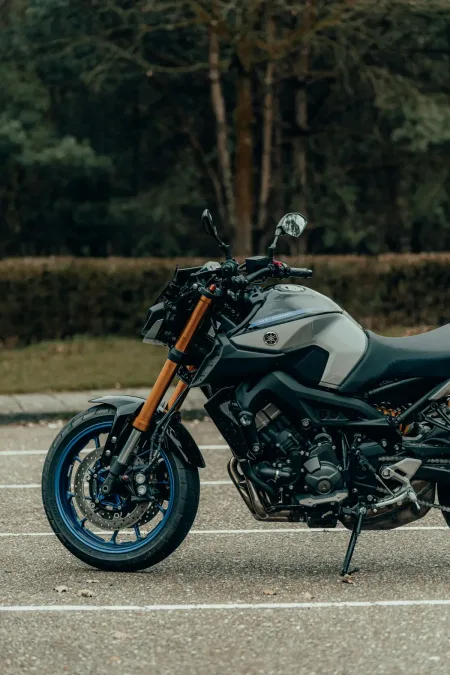
We also need to talk about the visual presence. The full LED lighting system on the 2026 model is extremely bright and cuts through the darkest rainy nights with ease. The split seat design gives it that premium naked bike silhouette. It looks fast even when parked on the sidewalk. But looking good is only half the battle. A true urban warrior needs to survive the concrete jungle, the potholes, the sudden rain showers, and the endless stop and go traffic. Let me show you exactly what this bike is made of beneath the plastics.

Under the Hood: Specs That Actually Matter
I absolutely hate reading pristine factory manuals that throw numbers at you without any real world context. What does a 41mm fork actually mean when you hit a pothole at 60 km/h? It means your wrists will not take the impact and the front wheel will stay glued to the asphalt. Honda borrowed the front suspension geometry directly from the bigger CB 500F. This upgrade gives the CB 300F an incredible torsional rigidity. Under heavy emergency braking, the bike does not dive dangerously forward. It remains composed and predictable.
Then we have the transmission. The addition of an assist and slipper clutch in this price bracket is a massive win for safety. If you accidentally drop two gears aggressively while entering a wet corner, the rear wheel will not lock up and throw you into the guardrail. The lever pull is so light that you can operate it with a single finger. This pairs perfectly with the six speed gearbox. Yes, a real sixth gear that lets the engine rest while you cruise on the highway at 120 km/h without vibrating your boots off.
Official Specs
Honda CB 300F Twister 2026
Engine & Performance
- Displacement 293.5 cc Street Translation: A solid bump in capacity that gives you instant acceleration exactly when you need to pass a truck on a tight avenue.
- Max Power 24.7 cv @ 7,500 rpm Street Translation: It is not a superbike, but it has enough breath to keep you safely ahead of the chaotic city traffic.
- Max Torque 2.67 kgf.m @ 5,500 rpm Street Translation: The real magic trick. You get maximum pulling power very early, meaning less gear changes and a very relaxed city ride.
Transmission & Chassis
- Gearbox 6-Speed Street Translation: An absolute highway blessing. The sixth gear acts as an overdrive to save fuel and reduce engine noise at cruising speeds.
- Clutch Type Assist & Slipper Street Translation: A feather light lever feel and a massive safety net that prevents rear wheel lockups during aggressive downshifts.
- Front Suspension 41 mm Telescopic Fork Street Translation: Premium rigidity inherited from the 500cc class. It swallows road imperfections and keeps the bike brutally stable in corners.
As you can see, the upgrades are not just marketing talk. They translate into a safer and much more enjoyable daily commute. The larger rear tire also deserves a mention. Going up to a 150/60 profile gives the bike a wider contact patch with the ground. When you lean into a long curve, the bike feels planted. You simply aim for the exit of the corner and roll on the throttle. The chassis does exactly what you ask of it.

The Battlefield: Rivals and Real World Flaws
We cannot talk about this Honda without mentioning its legendary arch nemesis, the Yamaha FZ25 Fazer. I have owned both brands and the rivalry is as real as it gets. The Fazer 250 is a literal tank. That engine has been on the market for almost two decades and it simply refuses to break. However, the Yamaha insists on keeping a five speed gearbox. When you take the Fazer on the highway and push past 110 km/h, the engine screams for mercy. The Twister completely dominates the Fazer on the highway thanks to its sixth gear and superior horsepower.
Now, I constantly hear newer riders asking if they should buy the CB 300F or jump straight into the Yamaha MT line since the engine sizes sound similar. Let me stop you right there because they are entirely different animals. If you want to understand the madness of a high revving twin cylinder sports naked, you need to read my detailed 2026 Yamaha MT-03 review and real world cost analysis. The MT is a thirsty weekend weapon that will cost you twice as much in maintenance. The Honda is your reliable, rational, everyday companion that will not drain your bank account every time you visit the gas pump.
But I promised you straight talk and no fluff, so let us discuss the negatives. The CB 300F is not perfect. The biggest complaint from myself and other real world owners is the seat. It looks incredibly sporty, but the foam density is just too firm. If you ride for thirty minutes to work, you will not notice it. But if you plan to hit the highway for over two hours, your lower back and your passenger will definitely start complaining. You might want to invest in a comfort seat modification if you plan on doing long interstate trips.
Another minor annoyance is the top speed. With 24.7 horsepower, you might expect it to hit 160 km/h easily. It does not. The speedometer usually tops out around 152 km/h, which is actually closer to 144 km/h on a GPS. Because Honda tuned this engine specifically for low end torque and durability using air and oil cooling, it sacrifices the high end top speed. For a city bike, this is a completely acceptable trade. I would take instant torque over a theoretical top speed any day of the week.

Financial Reality and Costs in Santa Catarina
Let us step away from the spec sheet and look at the actual money you will spend to put this bike in your garage, specifically using the state of Santa Catarina as our real world baseline for 2026. If you walk into a dealership in Florianópolis, Joinville, or Chapecó today, do not expect to pay the factory suggested retail price. Due to interstate freight costs from the Manaus factory and high market demand, the actual price you will pay for a zero kilometer unit floats between R$ 27,890 and R$ 29,900.
While the purchase price might sting a little, the absolute best part about registering this motorcycle in Santa Catarina is the vehicle tax legislation. The IPVA tax rate for motorcycles in this state is a beautifully low 1 percent. Based on the market value, your annual tax bill will be roughly 280 Reais. This is incredibly cheap compared to neighboring states and makes the long term ownership of the Twister highly attractive.
Insurance is another vital point. The Twister is a very popular motorcycle, which sadly makes it a target for theft in some regions. Fortunately, the southern capitals tend to have friendlier insurance premiums. For a male rider in his thirties with a clean record in Santa Catarina, a comprehensive annual insurance policy will cost around R$ 1,440 to R$ 1,850. If you install a certified GPS tracker, many insurance companies will drop that premium even further, easily bringing it below the 1,500 Reais mark.
Finally, we need to talk about the Honda maintenance schedule. The brand offers a solid three year warranty with no mileage limit. To keep you loyal to the official workshops, they give you free labor on the first two services at 1,000 km and 6,000 km. The real financial trick comes later. Starting at the third major service at 12,000 km, Honda provides the engine oil for free for the next seven consecutive services. The major 12,000 km revision will cost you around R$ 760 to R$ 1,073 including spark plugs and filters. If you do the math, the Twister proves to be an incredibly smart financial decision for 2026.
Tags:MotoGPHonda CB 300F Twister 2026CB 300F review2026 Honda motorcyclesTwister specsmotorcycle costsurban commuterslipper clutch
Recommended Posts
Comentários (0)
Participe da discussão
Faça login ou cadastre-se rapidamente para enviar seu comentário. É simples e leva menos de 1 minuto!
Nenhum comentário por enquanto. Seja o primeiro a opinar!