 MotoGP
Back to Home
MotoGP 11 min read time 1 viewsAug 07, 2026(Updated on Aug 09, 2026)
Quartararo at Honda in 2027: The End of Wings in MotoGP
The secret 850cc test in the rain revealed Quartararo's move to Honda in 2027 and the return of raw motorcycling to MotoGP.
The storm test that changed Quartararo's destiny
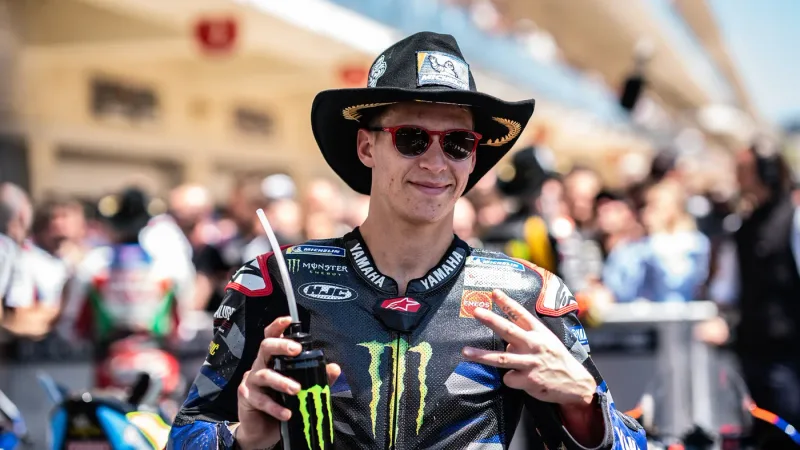
What seemed to be just another day of data collection in Sepang turned into the most defining moment of the last decade in MotoGP. Under a torrential storm that put the limits of engineering to the test, a secret test of Honda's 850cc prototype not only confirmed the new guidelines for 2027, but served as the stage for news that shakes the paddock's foundation: Fabio Quartararo signed a two-year contract with Honda HRC for 2027 and 2028. After eight seasons of ups and downs wearing Yamaha blue, the 2021 world champion decided that the future, far from current aerodynamic vices, lies in rebuilding the Japanese giant.
Quartararo's choice was no coincidence. The new 850cc era, which will ban over-reliance on wings and complex aerodynamic devices, demands a rider with extreme sensitivity to extract performance from bikes that will require more raw riding than electronic aids. By opting for Honda, the Frenchman bet on the factory's ability to reinvent itself before everyone else, using the experience of this test in the rain — where the 850cc prototype demonstrated a more organic behavior closer to raw motorcycling — as the pillar of his new trajectory. If you want to understand how Yamaha lost its main asset, see here the analysis of the team's technical decline.
Why the love story with Yamaha came to an end
The divorce between Fabio Quartararo and Yamaha, formalized in June 2026, was the climax of a spiral of technical frustrations that dragged on for nearly three years. Despite the monumental effort from the Iwata brand, the YZR-M1 suffered from worrying stagnation. While European rivals pushed forward with constant innovations, Yamaha found chronic difficulties in overcoming the top speed deficit and, crucially, in solving the lack of rear grip, the Achilles' heel that prevented Quartararo from fighting for consistent wins. The failure to transition to the V4 engine in 2026 was, perhaps, the final straw.
Unlike the inertia observed at Yamaha, Honda presented Quartararo with an aggressive shock plan. The strain on the relationship was immediate: the promise of a competitive bike did not materialize, and the rider's frustration was visible every weekend. Honda, on the other hand, promised technical freedom and a deep mindset shift.
Why did the departure happen?
- YZR-M1 Stagnation: Inability to evolve the chassis and engine as quickly as rivals.
- Aerodynamic Deficiency: The bike struggled to adapt to dirty air, making overtaking a nightmare.
- Honda Promise: Honda offered not just a competitive salary, but a total restructuring of HRC with exclusive focus on the new regulations.
- The V4 Factor: The failure to implement the V4 engine concept in 2026 sealed the final distrust.
850cc Era: The 2027 regulations explained straight to the point
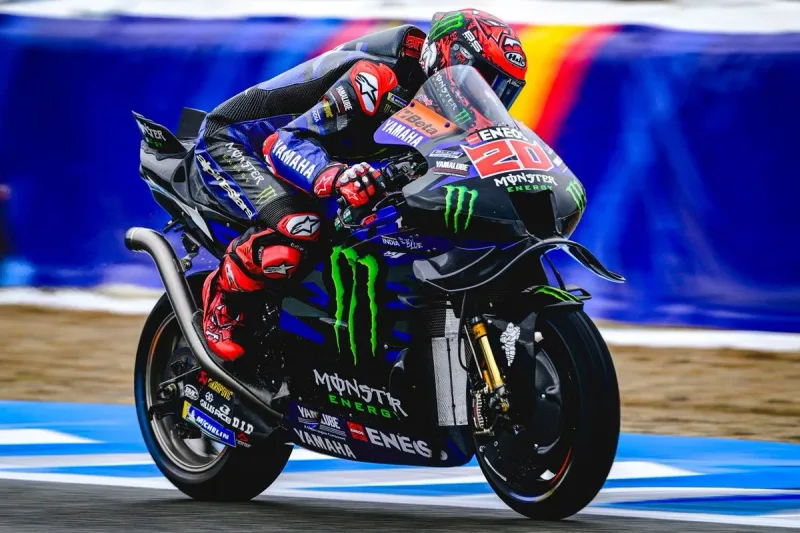
The 2027 regulations are not just a change in engine displacement; it is a complete reset in MotoGP. The reduction from 1000cc to 850cc, with a maximum bore of 75mm, is the strategic move to lower top speed on straights, increasing safety and, crucially, allowing bikes to be less dependent on aerodynamic gimmicks. The total elimination of ride-height devices will give riders back full control over the bike during braking and acceleration, removing a layer of electronic complexity that currently dictates race pace.
In addition to the engine, the fairing width will be reduced to 550mm, which will drastically decrease the downforce effect, forcing engineers to seek performance through mechanical setup and not just in wind tunnels. The minimum weight will be fixed at 153kg, and the mandatory use of 100% non-fossil fuel aligns the category with global sustainability goals.
Comparative Specs: MotoGP 2026 vs 2027
- Displacement: 1000cc (2026) -> 850cc (2027)
- Bore: 81mm (2026) -> 75mm (2027)
- Ride-Height: Allowed (2026) -> Banned (2027)
- Fairing Width: 600mm (2026) -> 550mm (2027)
- Minimum Weight: 157kg (2026) -> 153kg (2027)
Project RC214V: How Honda transformed to turn the tables
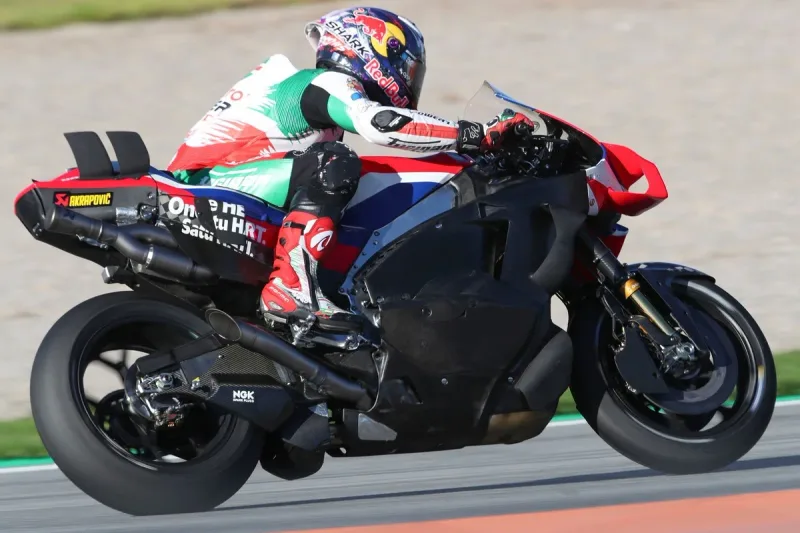
Quartararo's arrival is just one of the pillars of a revolution that Honda HRC started in the silence of its offices. To develop the new 850cc RC214V, Honda abandoned its historical conservatism by "westernizing" its technical staff. Signing Romano Albesiano, ex-Aprilia, to lead technical development was a masterstroke. Albesiano brought with him a design vision that values agility and rider feedback, moving away from the rigidity that marked Honda's glory years but became obsolete with the dawn of the aero era.
The pit garage structure was also revamped. The arrival of Cristhian Pupulin as crew chief guarantees direct and efficient communication between the track and the factory. HRC ceased to be an unchangeable hierarchical structure to become an agile development environment, where Quartararo is not just an employee, but the gravitational center. Learn more about the behind-the-scenes changes in Honda engineering and understand why the new RC214V project is considered the biggest technological gamble of the last ten years.
The earthquake on the grid: Who will ride where in the 850cc era
Quartararo's signing with Honda triggered an unprecedented Silly Season. With the open seat at Yamaha, the Japanese team, in a total renewal move, confirmed Jorge Martín and prodigy Ai Ogura to try to rebuild its image. Meanwhile, Aprilia, aiming for the top, signed current champion Pecco Bagnaia, creating a super-team. In the Honda ecosystem, the strategy is to bet on talents who grew up already adapted to more agile riding concepts, bringing young promises like David Alonso and Diogo Moreira to join the development team.
This domino effect shows that the 850cc era won't be won just by having the best bike, but by whoever has the best synergy between rider and new engineering. See how the rider market reorganized for 2027. But, after all, what will it be like to ride this new machine? In testing, reports are unanimous: the 850cc bike is twitchy, requires more muscle, and is far less forgiving. In the next section, we will reveal the secret telemetry data proving why the "raw rider" will be the king of 2027.
The pain of style: From smooth inline engine to V4 punch
Fabio Quartararo's transition to Honda in 2027 represents not just a team swap, but a true re-engineering of his nervous system as a rider. For nearly a decade, the Frenchman molded his riding style around Yamaha's philosophy, where smoothness, cornering speed, and maintaining momentum with the inline-four engine were the keys to victory. The M1 demands a "ballet dancer" style, where any abrupt movement ruins the rhythm. Switching to Honda's V4 architecture means, in practice, abandoning everything he knows about the connection between throttle and rear wheel.
Honda's V4, especially with the new 850cc configuration, delivers explosive power output, focused on aggressive acceleration and heavy braking—the classic "stop-and-go" behavior. Quartararo will have to learn to tame a bike that doesn't seek elegance, but rather physical imposition. He will need to harden his braking points and learn to pivot the bike, a drastic change for someone who spent years prioritizing constant flow. It's a shift requiring not just mechanical tuning, but a complete unlearning of instincts that became subconscious over years of dominance in the premier class.
Garage Highlight: The secret of the transition isn't just power, but the "feeling" on corner entry. While Yamaha 'floats', Honda 'attacks'. For Quartararo, the biggest difficulty will be accepting that the bike won't do the cornering work for him; he will have to force the machine to obey at every twist of the wrist.

Pirelli Tires in 2027: The X-factor that will redefine braking limits
The arrival of Pirelli as the official tire supplier in 2027 is possibly the most underrated game-changer of the new era. Switching suppliers changes not only the rubber, but the carcass construction philosophy itself and how temperature is maintained. For years, the paddock lived under the technical regime of Michelin tires, which have very specific rigidity and feedback characteristics. Pirelli, with its vast experience in World Superbike and other categories, brings an approach that favors immediate rider confidence, but with a degradation curve that challenges the limits of the bike's hardware.
For a rider like Quartararo, used to gauging the exact limit of the French carcass for eight seasons, transitioning to Pirelli will require a rapid adjustment in wear management. With 850cc bikes placing different demands on the package, how the rider manages the front tire under deep braking will be the factor separating title contenders from the rest. The challenge is that Pirelli's grip limit tends to be very high right up until it drops drastically, requiring far more refined human traction control. Whoever understands first how this rubber works under the stress of new specs will hold an uncatchable competitive advantage in the opening rounds of the championship.
Open GPS and naked bikes: The controversy heating up behind the scenes
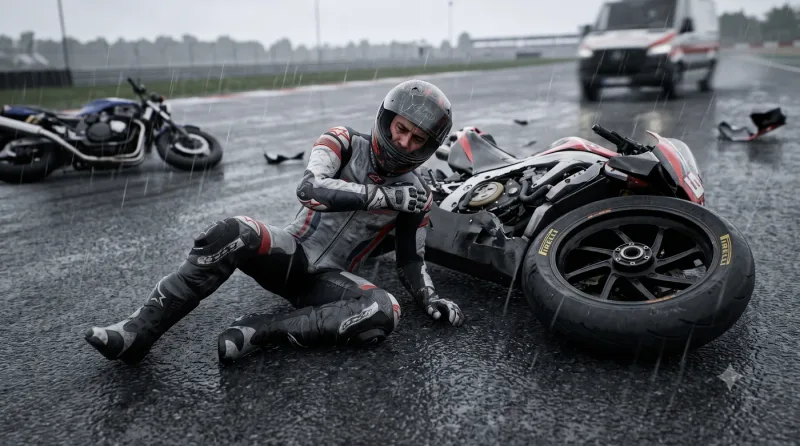
The recent test in Sepang, conducted under a torrential storm, did not only test the endurance of 850cc prototypes, but visually exposed the end of an era: the era of prohibitive aerodynamic wings. Photographers present at the circuit were stunned to capture images of the RC214V almost stripped of its aero appendages, featuring a much leaner and sleeker silhouette. This return to a more minimalist design is a deliberate attempt by Dorna to reduce the "wake turbulence" that makes overtaking so complex today, bringing back the spectacle of wheel-to-wheel racing.
Beyond aesthetics, the big controversy circulating behind the scenes is the opening of GPS telemetry data among all teams. Historically, data secrecy was the biggest barrier to entry for satellite teams or recovering factories. With open telemetry, performance gains from a brand like Ducati or Honda will be instantly accessible to all competitors. This drastically levels the playing field, making pure rider talent and race engineer reaction speed more decisive factors than "industrial secrets" stored on a laptop. The mood in the paddock is tense, as the era of hidden advantages is relentlessly coming to an end in the name of a closer championship.
Was it worth the risk? The financial and technical balance of Quartararo's gamble
Analyzing Quartararo's move to Honda requires looking beneath the surface. We are talking about an astronomical investment by HRC, which is no longer content being a supporting actor on the grid. By signing a modern-era world champion, Honda is signaling a shift in priority: the Europeanization of its engineering processes. This means that, starting in 2027, Honda will have a faster development system, focused on the demands of a rider who understands what it takes to be fast in the European-dominated pack, something the brand struggled to achieve in recent years.
The risk-reward ratio of this gamble is clear: Honda is buying not just technical ability, but Quartararo's capacity to extract the maximum from machinery under development. With HRC's unlimited financial backing and absolute priority on parts, the team is putting itself right back in the sights of European powerhouses like Ducati and Aprilia. If the 850cc project succeeds, Quartararo won't just be swapping bikes; he will be the architect of the revival of the biggest power in MotoGP history. It is a high-risk bet, but with a potentially legendary return that would cement his name in the pantheon of all-time greats in the sport.

Straight talk: Raw muscle motorcycling is officially back
We've reached the crucial point: 2027 MotoGP won't be about who has the best onboard computer, but who has the best wrist. The return to 850cc displacement and the drastic reduction in aerodynamic downforce are, in reality, a love letter to raw motorcycling. The category was becoming predictable, a battle of algorithms and fluid dynamics. Now, by stripping away the wings, the bike becomes an untamed beast once more that demands respect, physical strength, and above all, the courage to open the throttle where sensors would say not to.
In 2027, the advantage will once again smile upon those who feel the bike through the seat of their pants—strong-wristed riders who don't rely on artificial stability to find speed. For enthusiasts missing the insane battles of past decades, this change is a breath of fresh air. We are entering a cycle where human error will be punished, but brilliance will be rewarded in a much raw manner. Quartararo at Honda is the perfect symbol of this transition: the pursuit of essence under the mantle of modern technology. And you, do you believe the Frenchman can tame the Honda and take the title, or will you miss the era of "video game bikes"? Leave your opinion in the comments, we want to know how you see this accelerated future.
Recommended Posts
Comentários (0)
Participe da discussão
Faça login ou cadastre-se rapidamente para enviar seu comentário. É simples e leva menos de 1 minuto!
Nenhum comentário por enquanto. Seja o primeiro a opinar!